
TRAVEL DIARY:
The Hidden Coastal Village of Omiš, Croatia
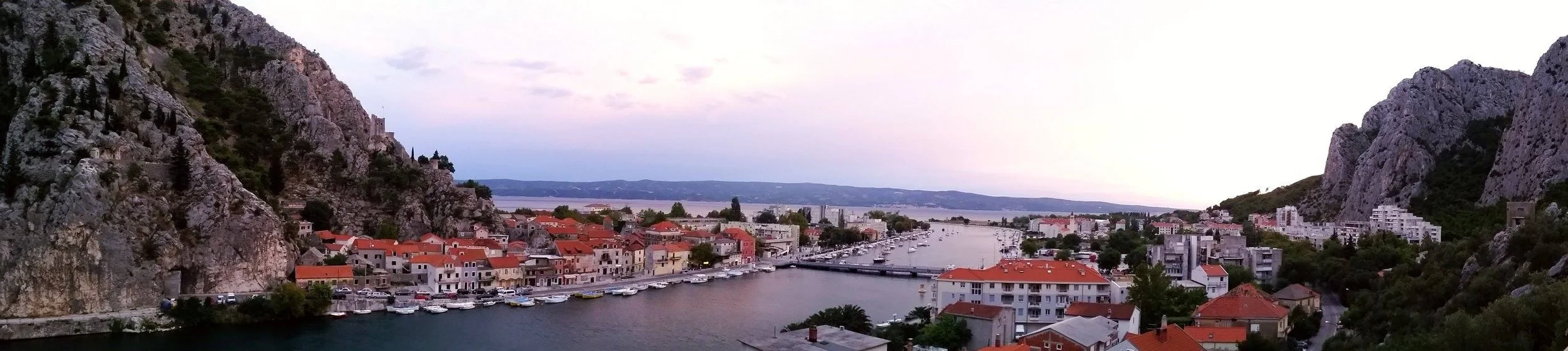
Just sixteen miles south of Split lies the ancient pirate cove of Omiš, Croatia.
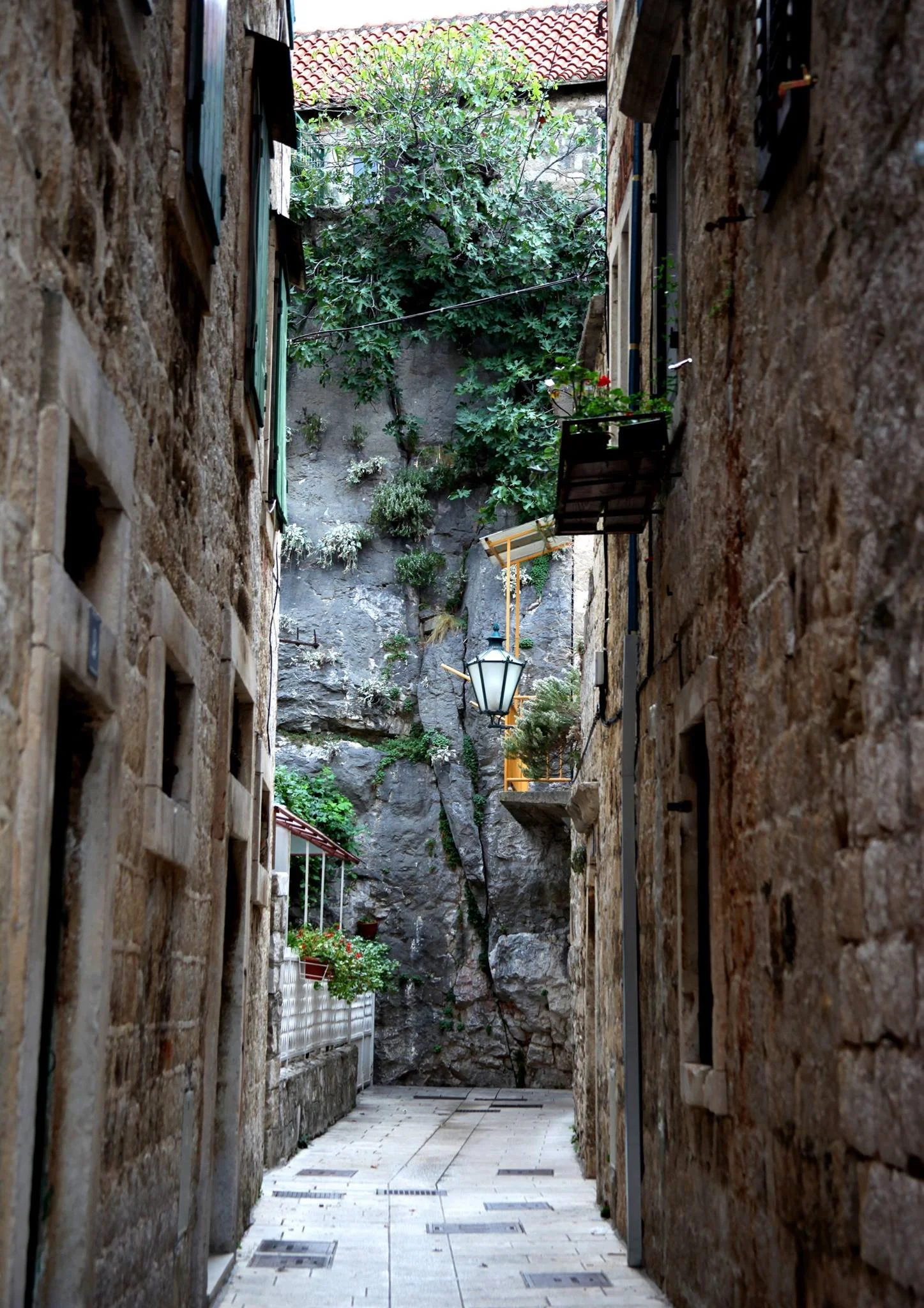
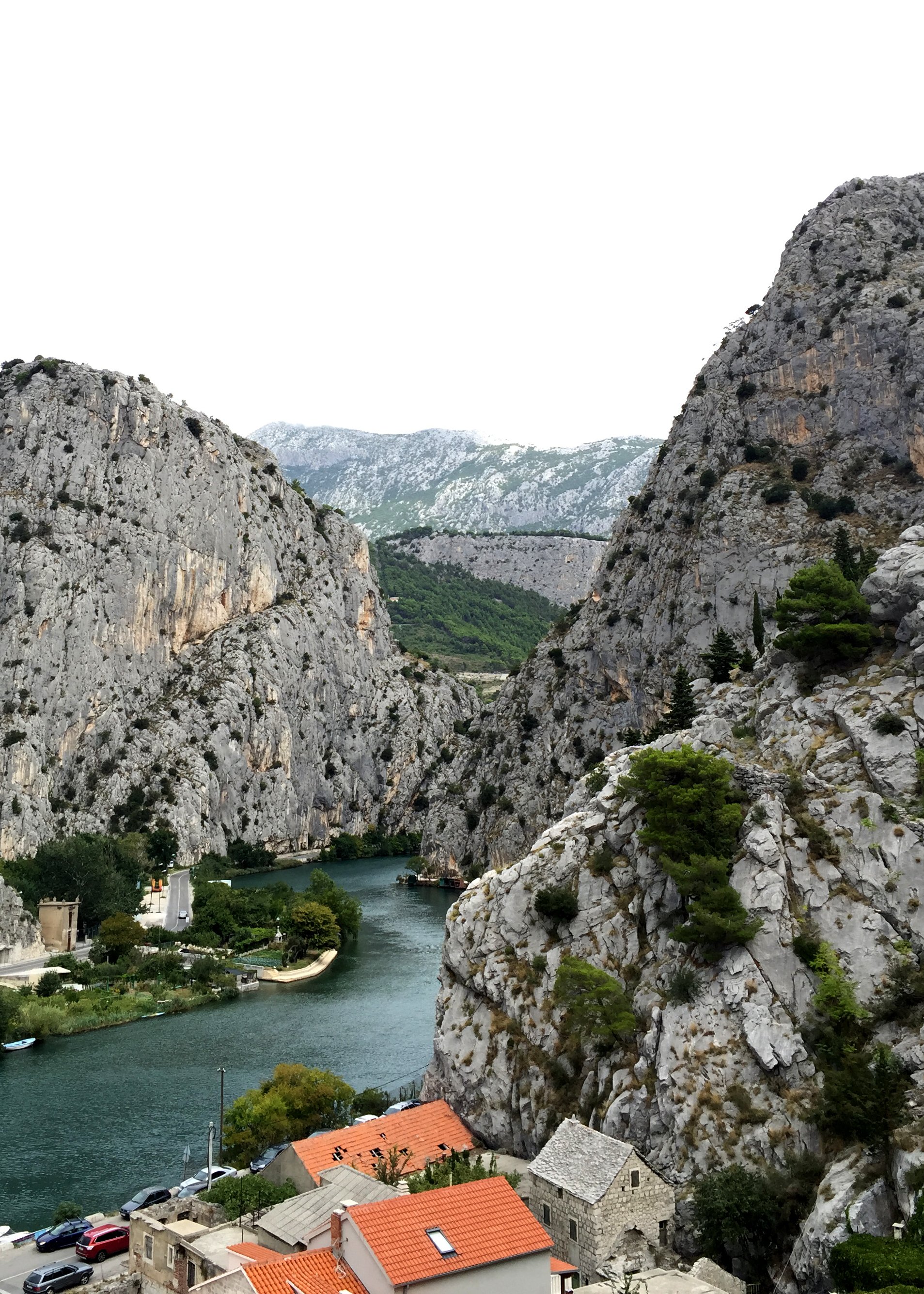
Steep towers of limestone encircle the town on three sides, while a wide, deceptively calm river cuts it in two before spilling out into the dazzlingly blue sea. Small boats clog the marina on either side of the single bridge that connects the two halves of town. Despite very modern additions, medieval roots are still apparent in smoothly worn narrow limestone walkways that meander through buildings dating back as far as the 6th century.
Take a wrong turn here and it’s likely you’ll suddenly find yourself in someone’s blooming garden, a tiny restaurant, or confronted with a rocky cliff face.
Though small, Omiš has plenty to offer. It is a joy to walk the smooth marble and stone streets of the old city, taking in the brightly colored homegrown fruit stands of the open air street markets, friendly shop owners selling homemade raki (the local scotch), and art galleries. Smoke drifts from cafes selling piping hot espressos as small cats slink from alley to alley.
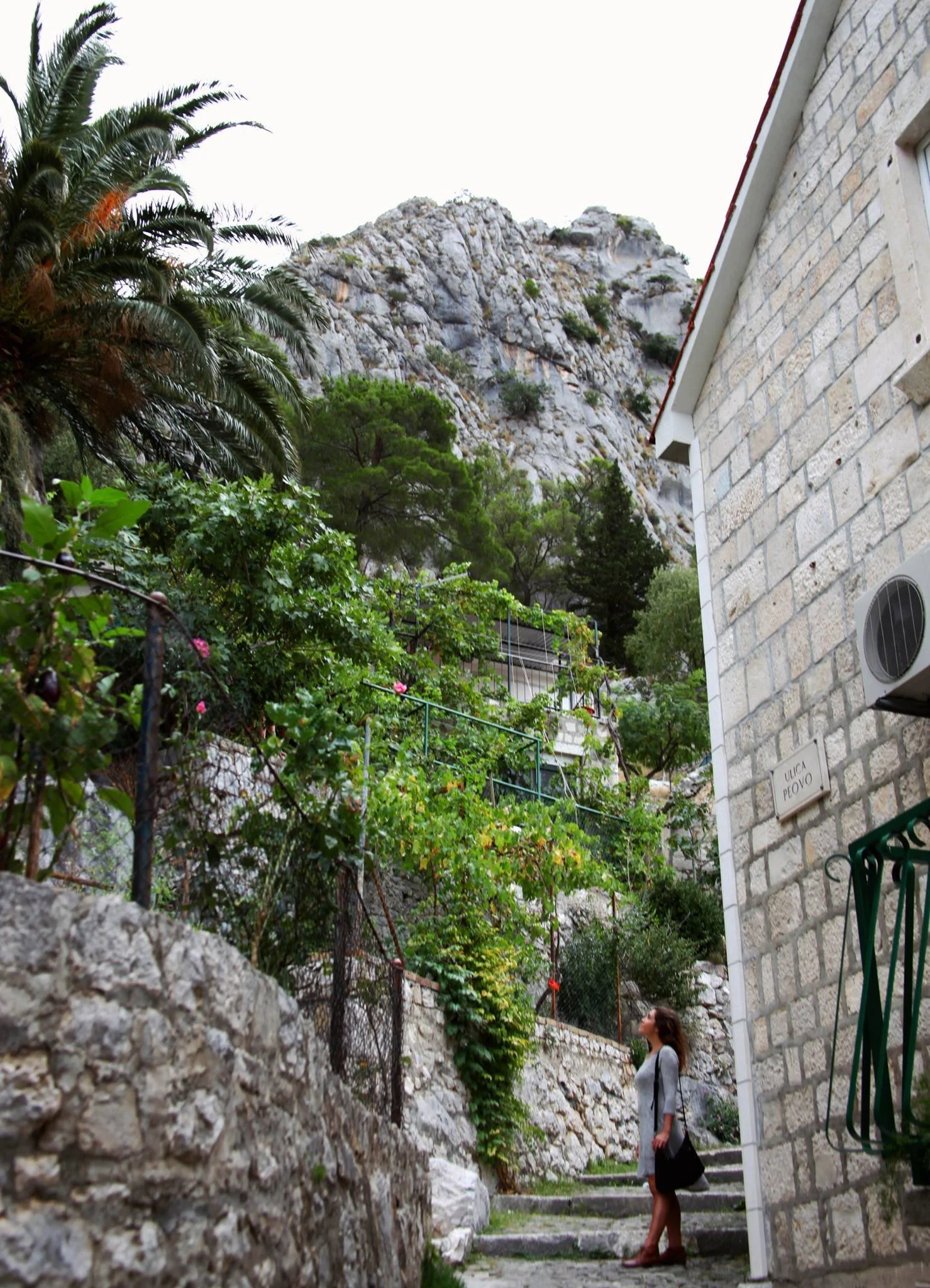
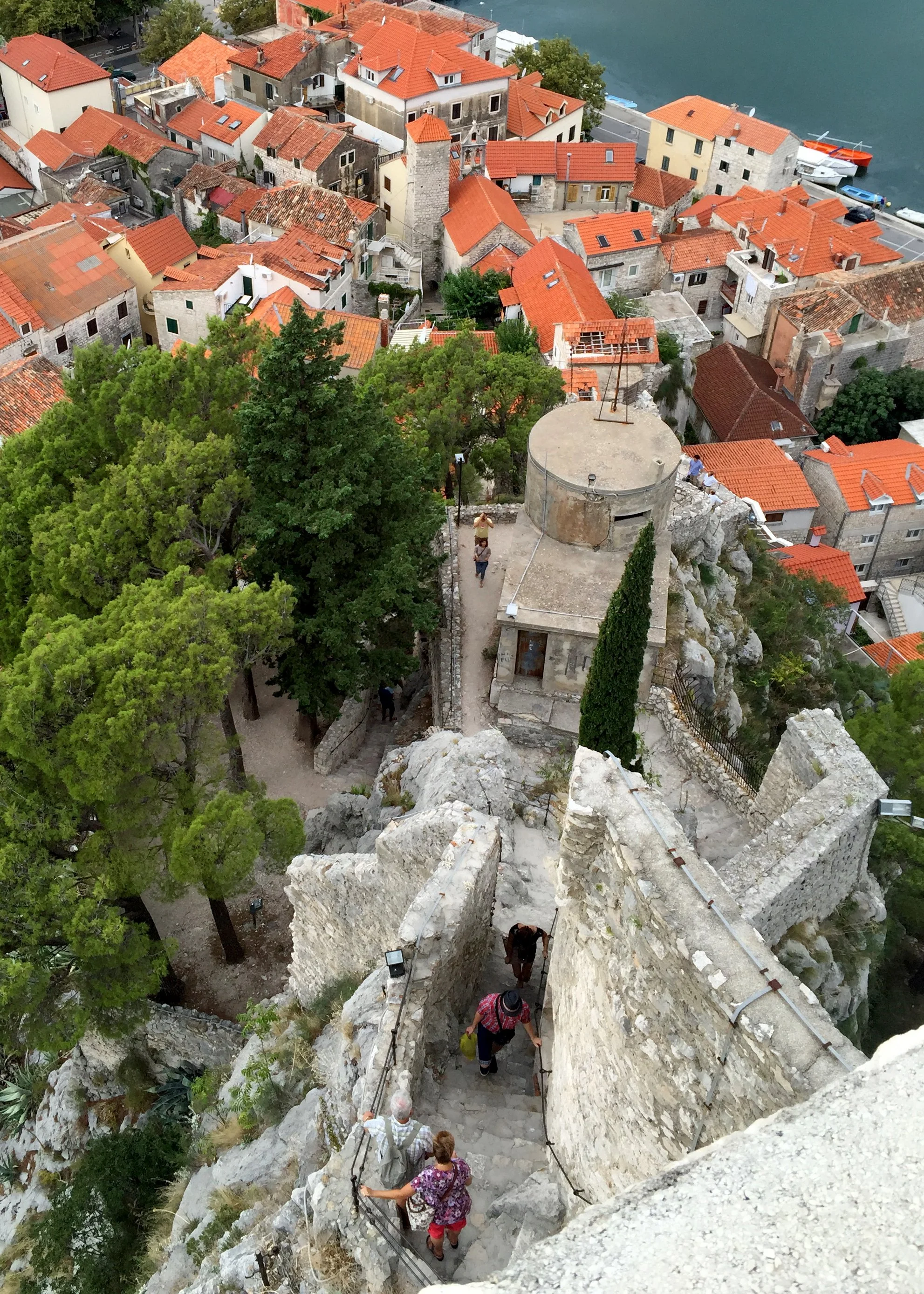
Adventure lovers will find zip-lining, rafting, and canyoning options. Many of the boats and yachts in the marina can be chartered as well. A short but steep climb leads to Fortress Mirabella and provides an intriguing change of perspective. From there, the jagged steep ridges appeared like a serpent’s tail curling over the horizon.
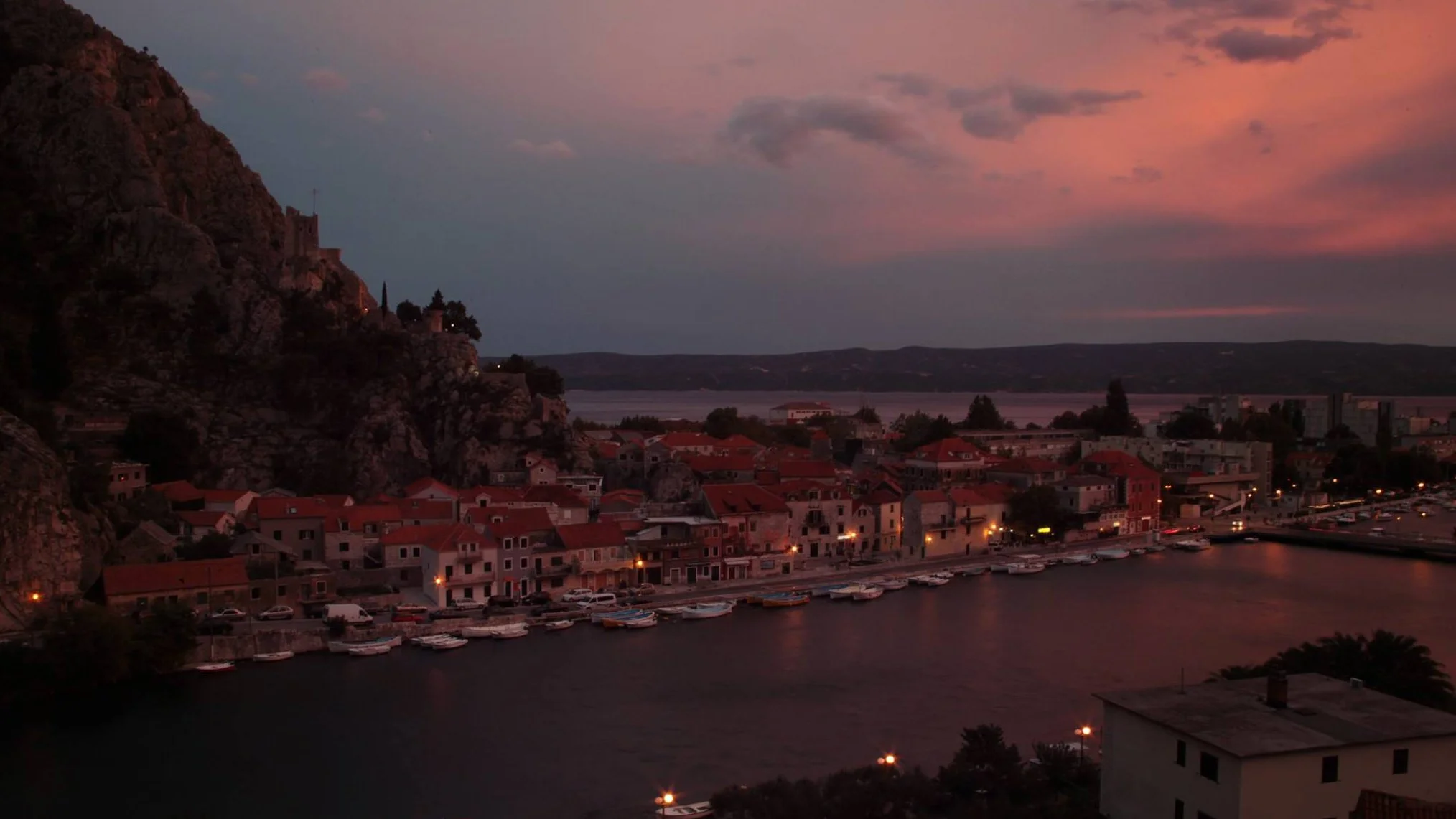
The terrace of Restaurant Knez provides one of the best views of Omiš and nearby islands, and where we watched as the clear day turned into a cloudy pink twilight and sink into darkness. We dined on steak with mushroom sauce, whole Cetina trout, and of course a glass or two of grappa. For lamb peka, an out of this world traditional dish, order a day ahead.
On the advice of our waiter, we checked out the roof, where we were alone except for the coming storm. The wind whirled about us as the lights of Omiš shone bright through the heavy air, reflecting on the river below and bouncing off the stone monoliths.
The city looked like a settling snow globe, with flowers and leaves swirling past and back again. We could hear jubilant voices from a group of friends singing what sounded like an ancient sea shanty. They held each other as they battled the gusts that ripped through the streets, their voices rising in defiance even as they stumbled.
I closed my eyes and took in the sounds of the song that traveled untold centuries, across similar drunken nights that echoed these very walls. As the storm whipped around me, throwing up the scents of sea and spice, I felt I could be in any time at all.